Rethinking Value Creation in a World That Refuses to Stand Still
Reflections from the 8th Global Conference on Creating Value
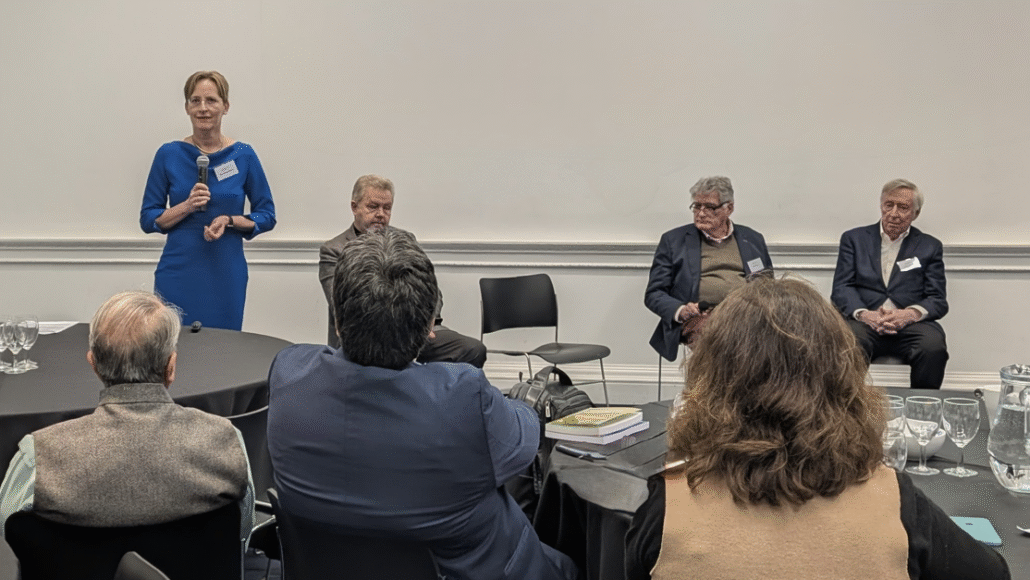
At the 8th Global Conference on Creating Value in London, I contributed a perspective that has been at the centre of much of my recent work: organizations are still trying to create value with an operating system designed for a different era. It was a setting that invited deeper reflection on what value creation really means when business arenas shift faster than structures can adapt.
Over the past century, management has relied on principles that suited a world where change unfolded predictably and incrementally. Stability could be engineered, variation minimized, and surprises handled by specialist functions at the edges of the firm. Inside the organization, the goal was efficiency above all else. And for a long time, this logic produced growth and prosperity.
But value creation today takes place in environments that no longer behave in this gradual way. Markets move in pulses rather than cycles. Customer needs evolve long before processes can catch up. Knowledge travels instantly, and innovation emerges from interactions that extend far beyond firm boundaries. In this context, the structures that once generated reliability begin to slow down learning, decision-making and adaptation.
This is where value creation starts to falter. Not because organizations lack data or technology, but because they are still running on assumptions built for a slower world. Hierarchies designed for centralized control struggle to interpret fast-moving signals. Teams close to customers see what is happening, yet decision rights often remain elsewhere. And while ecosystems reshape entire sectors, many companies still operate as if they were islands, protected by internal optimization.
My contribution at the conference focused on this gap between environment and operating system. If business arenas have become dynamic, interconnected and unpredictable, then organizations need architectures that match this reality. That means treating change as a constant rather than an interruption. It means enabling decisions to form where knowledge emerges. It means building value creation around networks of capability, not around rigid departmental borders. And it means viewing every shift in conditions not as a disruption, but as input for renewal.
Value creation in such a world becomes a process of continuous regeneration. Organizations learn as they go. They evolve their structures in response to the environment rather than trying to force the environment into old structures. They participate in ecosystems instead of trying to manage complexity from a distance. And they create value not by protecting efficiency at all costs, but by aligning their architecture with the rhythm of their markets.
The conference offered a fitting backdrop for this perspective: diverse industries, different lenses on value, and a shared recognition that the old management logic is reaching its limits. What comes next will not be a small adjustment. It will be a shift toward operating systems designed for movement rather than preservation.
For organizations willing to rethink how they create value, this moment represents an opportunity. Not to return to what once worked, but to build the capabilities that today’s world demands. Value creation becomes a living process — and the organizations that thrive will be those prepared to evolve with it.